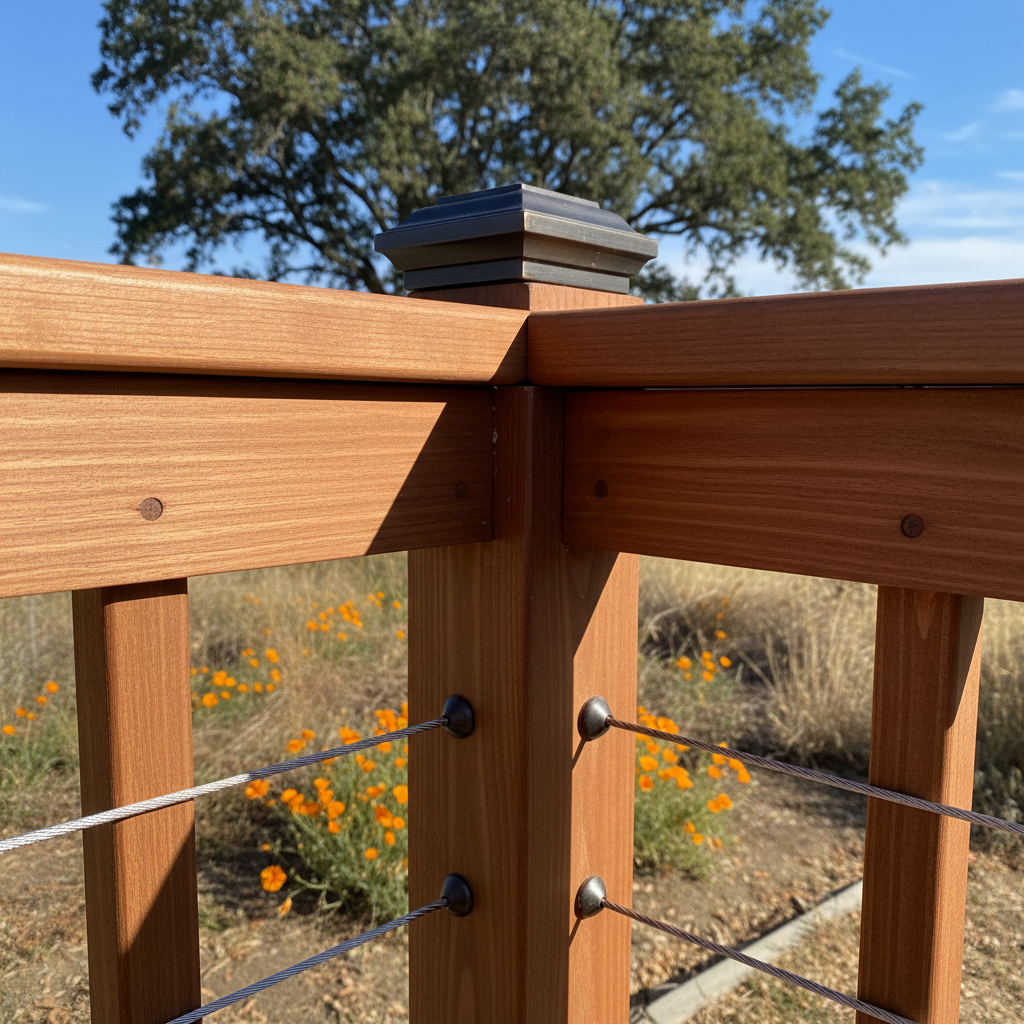
Alright, let's talk deck railings. You've got a deck, maybe it's seen better days, or maybe you're building a new one and you're staring at that open edge, wondering what's next. Railings aren't just for looks, they're a critical safety feature, and getting 'em right is non-negotiable. I've seen plenty of folks around Modesto, from College Park to Village I, try to DIY their railings, and sometimes it goes great, sometimes... not so much. So, let's break down what you need to know.
Before You Even Think About Cutting a Board
First things first, you gotta know the rules. Building codes are a big deal, especially when it comes to safety stuff like railings. In Modesto, and pretty much everywhere else, there are specific requirements for railing height, baluster spacing, and how much force that railing needs to withstand. Generally, residential deck railings need to be at least 36 inches high. And the gap between balusters can't be more than 4 inches. That means a 4-inch sphere shouldn't be able to pass through. This isn't just some arbitrary rule; it's there to stop little kids from falling through or getting their heads stuck. You'll want to check with the City of Modesto's building department or look up the current California Residential Code to be absolutely sure. Ignorance of the code won't fly if there's an inspection or, God forbid, an accident.
Next, think about your material. Wood, composite, aluminum, steel, cable railings, glass panels... there are tons of options. Each has its own pros and cons in terms of cost, maintenance, and how hard it is to install. Wood is classic, but it needs regular upkeep, especially with our hot Modesto summers and occasional winter rains. Composites are low-maintenance but can cost more upfront. Cable railings look sleek but can be tricky to tension correctly. Aluminum and steel are durable but might require special tools or welding for a truly custom job. Pick something that matches your home's style and your budget, but also consider your DIY skill level.
During the Installation: DIY vs. Pro
This is where you really need to be honest with yourself. Can you handle this, or should you call someone like us at Elite Deck Solutions?
What You Can Probably DIY (If You're Handy)
- Basic Wood Railings: If you're comfortable with a saw, a drill, and a level, and you're just replacing like-for-like wood pickets on an existing, sturdy frame, you might be able to tackle this. Measuring accurately, cutting straight, and making sure everything is plumb and level are key. You'll need good fasteners designed for outdoor use.
- Pre-assembled Panel Systems: Some composite or aluminum systems come in pre-assembled panels that just need to be attached to posts. These can simplify things quite a bit, as long as your posts are perfectly spaced and plumb.
- Simple Post Replacement: If only a few posts are rotted and the rest of the system is sound, and you're confident in your ability to properly anchor new posts to the deck framing, you might be able to swap them out.
When to Absolutely Call a Pro
- New Deck Construction: If you're building a brand new deck, especially one that's elevated, let a pro handle the railings. The entire structure needs to be engineered correctly, and railings are an integral part of that.
- Complex Designs or Materials: Cable railings, glass panels, custom metalwork – these aren't typically beginner projects. Cable tensioning is an art, and glass panels need precise measurements and installation to be safe and look good.
- Structural Issues: If your existing railing posts are wobbly, rotted deep into the deck frame, or if the deck itself feels unstable, you've got bigger problems than just replacing a few balusters. A professional needs to assess the structural integrity of your entire deck. We see this sometimes in older homes where the original deck wasn't built to today's standards or has suffered from years of neglect.
- Any Doubt About Code Compliance: If you're not 100% sure your installation meets local codes for height, spacing, and strength, don't guess. A pro knows these codes backwards and forwards. It's not just about passing inspection; it's about keeping your family and guests safe.
- Time and Tools: Do you have the right tools? Do you have the time? Railing installation can be fiddly and time-consuming. If you're short on either, a pro will get it done efficiently and correctly.
After the Installation: Keeping It Safe and Sound
So, the railings are up. Great! Your job isn't quite done, though. You need to do regular inspections. I'm talking at least once a year, maybe more if you live in an area with a lot of sun exposure or heavy foot traffic on the deck. Check for loose posts, wobbly sections, or any signs of rot, especially where wood meets the ground or other wood components. Look for rusty fasteners or cracked composite. Give the railing a good shake – it shouldn't budge much. If you have wood railings, keep up with the staining or painting to protect them from our Central Valley weather.
Proper maintenance extends the life of your railings and, more importantly, ensures they stay safe. Don't ignore a small wobble; it can quickly become a big problem. If you spot anything concerning, address it immediately. Sometimes it's a simple fix, other times it might indicate a deeper issue that needs professional attention. Your deck is an extension of your home, and its safety features are just as important as the roof over your head.